

Setting Writing Goals for 2026
A gentle approach to writing, revising, or publishing your book this year.

🎊Happy New Year, writers.🎊
If you’re reading this on January 1st, feeling as if you should already have your entire writing year mapped out—goals set, word counts decided, discipline locked in—we want to offer you a different approach.
At book inc, we’ve worked with hundreds of writers as they navigate the long journey of writing, revising, and publishing a memoir or novel. And here’s what we’ve learned: the writers who succeed aren’t always the ones with the most ambitious plans or the strictest routines. They’re the ones who set goals that actually fit their lives.
Start With What’s True
Before you commit to writing 1,000 words a day or finishing your first draft by March, ask yourself: What do I actually want from my writing this year?
Maybe it’s finally starting that memoir you’ve been thinking about for years. Maybe it’s getting a completed manuscript into shape for submission. Maybe it’s simply showing up more consistently to the work, building a practice you can sustain.
There’s no wrong answer here. But clarity about what you’re actually working toward makes every other decision easier.
Make Room for the Real Journey
Here’s something we don’t talk about enough: writing a book takes longer than you think. Not because you’re slow or undisciplined, but because the work itself demands time—time to discover what you’re really writing about, time to revise, time to let ideas develop.
When you set goals for 2026, build in space for the messiness of the creative process.
Your memoir might need to be outlined three different ways before you find the structure that works. Your novel’s protagonist might surprise you halfway through and demand a different arc. That’s not failure—that’s writing.
The most useful goals make room for discovery, not just execution.
Find Your Rhythm
Some writers thrive with daily word counts. Others write in intensive bursts, then step back to think. Some need the accountability of deadlines. Others need spaciousness.
Part of setting good writing goals is knowing—or discovering—what rhythm actually works for you.
If you’ve never been able to stick with “write every day,” maybe that’s not your rhythm. Maybe you write three times a week and think about your manuscript on the other days. Maybe you draft in the morning and revise at night. Maybe you need longer sessions less frequently.
Pay attention to when you do your best work. Then structure your goals around that truth, not around someone else’s ideal writing life.
Small Steps, Real Progress
Here’s something that might relieve some pressure: you don’t need to overhaul your entire life to make meaningful progress on your book.
You just need to show up with some consistency.
An hour twice a week adds up. Three pages at a time becomes a chapter. Small, steady effort compounds in ways that intense bursts followed by long absences never do.
If your goal feels overwhelming, make it smaller. Instead of “finish the first draft,” try “write one scene per week.” Instead of “revise the entire manuscript,” try “revise one chapter per month.”
You can always expand a goal that’s working. But a goal that stops you before you start helps no one.
You Don’t Have to Do This Alone
One of the myths about writing is that it’s a solitary endeavor. And yes, the actual work of putting words on the page happens alone. But getting from initial idea to published book? That almost always happens in community.
Most successful authors will tell you they had fellow writers who read drafts, offered feedback, understood the particular challenges of the long-form work, and reminded them why it mattered when doubt crept in.
If your 2026 writing goals include starting or finishing a memoir or novel, consider what kind of support would help you succeed.
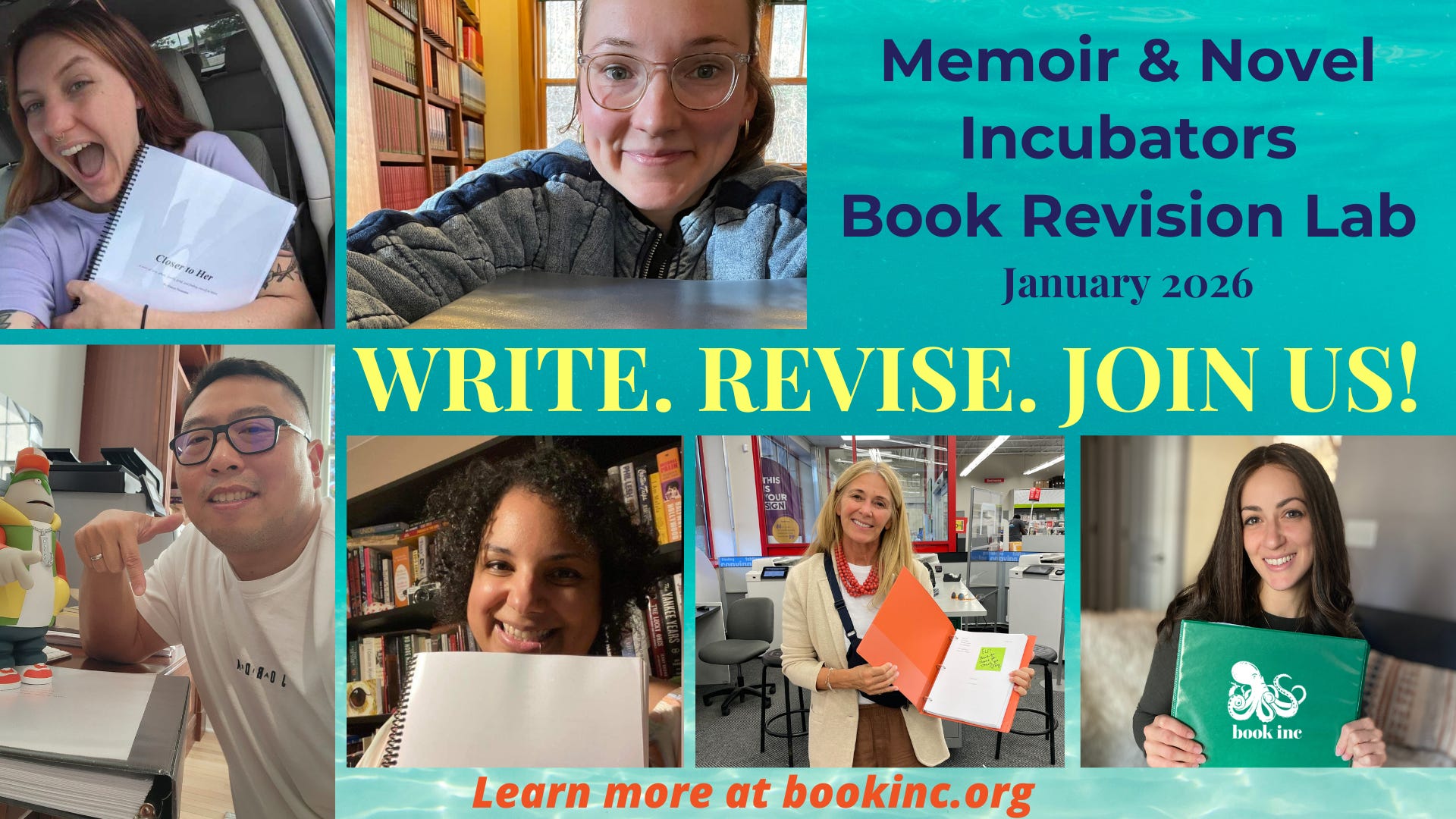
Our Memoir and Novel Incubators provide year-long structure, accountability, and community for writers drafting book-length manuscripts. Starting January 22, you’ll work alongside a small cohort of fellow writers with bi-weekly sessions and ongoing support.
If you’ve already completed a draft and need guidance through the revision process, our Book Revision Lab begins January 29. In six months, you’ll learn revision techniques that unlock your manuscript’s potential and work toward a polished, submittable draft.
Both programs meet in the evenings on Zoom and are designed for working writers with full lives. You’ll be guided by Peer Artist Leaders—book inc writers who are also working on their own manuscripts.
Your Book Is Waiting
Somewhere between the ambitious plan that overwhelms you and the vague intention that leads nowhere is a goal that fits—one that challenges you without crushing you.
So take some time in these early January days to get clear on what you want and what you need. Then build a plan you can actually follow.
Your book—whether it’s just beginning to take shape or waiting for the revision that will bring it to life—deserves that kind of attention. And so do you.
Here’s to a year of showing up, making progress, and discovering what your writing can become. 📖✨
2026 SCHOLARSHIPS AVAILABLE
book inc is pleased to announce that we have two scholarships available for our 2026 Incubator programs.
Sankofa Scholarship for Memoir Incubator
Black women’s stories, told in their own voices, can serve as a site of historical and cultural repair in our country.
Candidates for the Sankofa Scholarship for the Memoir Incubator must identify as a black woman and should not have a literary agent or have published a full-length book.
Applications require two essay responses (500 words max each) addressing how your identity as a black woman has influenced your writing and the connection between archival silence and writing memoir.
If you meet these qualifications and have always wanted to write your story, please apply now!
Educator Scholarship for Memoir or Novel Incubator
Teachers carry countless stories—shaped by their classrooms, their students, and their own transformative journeys. This scholarship creates space for educators to claim time for their creative work.
Candidates for the Educator Scholarship must be currently working as teachers (K-12, higher education, or alternative education settings) and demonstrate a financial need.
If you’re an educator ready to make your own story a priority, we encourage you to apply!
Please email us at bookinc@projectwritenow.org to request the educator scholarship.
About book inc
book inc is a writing collective dedicated to helping writers draft, revise, and publish memoirs and novels. Our book incubators and revision workshops help writers realize their artistic and commercial potential.